Yao Yao: Brothers (2012)

Posted · Add Comment

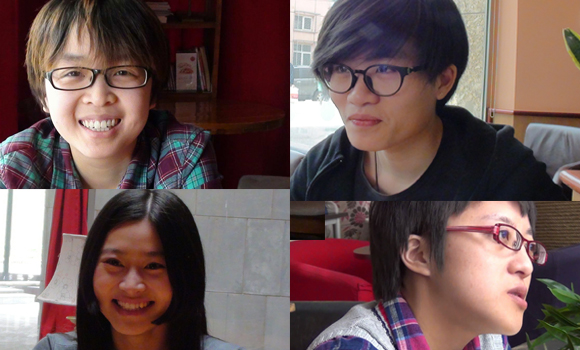
The documentary “Brothers” takes us to the female-to-male transgender community in China, a community which endures hardships that are unfathomable to the majority of Chinese society. It documents the life of Tony, who forms part of a group of female-to-male transgendered people who call each other brothers. The film shows Tony’s road to self-acknowledgement, his troubles at work, his decision to undergo sex reassignment surgery and all the difficulties he encounters on his path.

Fan Popo: Be a Woman (2011)

Posted · Add Comment

Every night, the “Only Love” bar in Nanning puts on a glamorous transvestite show. This documentary follows the four drag queens over a span of three years to depict a touching and realistic perspective beyond flashy costumes, glamorous accessories, dazzling stage sets, and sensual dancing.

Jai Arun Ravine: Tom/Trans/Thai (2013)

Posted · Add Comment

Tom / Trans / Thai is a short experimental film that approaches the silence around female-to-male (FTM) transgender identity in the Thai context by addressing tom and trans-masculine identities in Thai and Thai American communities and the transnational relationships between gender and language.

Interviews conducted with Thai and Thai American toms and trans-masculine people are channeled through the moving body in an effort to locate ourselves in the Thai landscape and create a new language for our kind of being.

Adele Tulli:365 without 377 (2011)

Posted · Add Comment

https://www.youtube.com/watch?v=Ea-dk1KPi28 Imposed under the British colonial rule in 1860, Section 377 of the Indian Penal Code criminalized any sexual acts between consenting adults of the same sex, stigmatizing them as “against the order of nature”. On 2nd July 2009 the Delhi High Court passed a landmark judgment repealing this clause, thus fulfilling the most basic […]

Shu Lea Cheang: I.K.U. (2000)

Posted · Add Comment

Shu Lea Cheang is best known for her 2000 cult smash I.K.U. in which sensual cyborgs fuck for information and pleasure. The film, heavily influenced by Blade Runner, is perhaps the first cyperpunk movie to radically explore the possibilities of cybernetic sexualities. The pioneer in the field of media art embraced internet and hacking culture early on, recognizing both its capacity to enslave as well as liberate, mixing that with queer and sexually explicit imagery bringing something new to the cultural landscape. Cheang describes herself as both a “cyberhomesteader” and a “high-tech aborigine” hinting at meta-levels of not only her own life, but the worlds of her films.